
Garden Drainage Fixes for Waterlogged Lawns
16 November 2026
Share
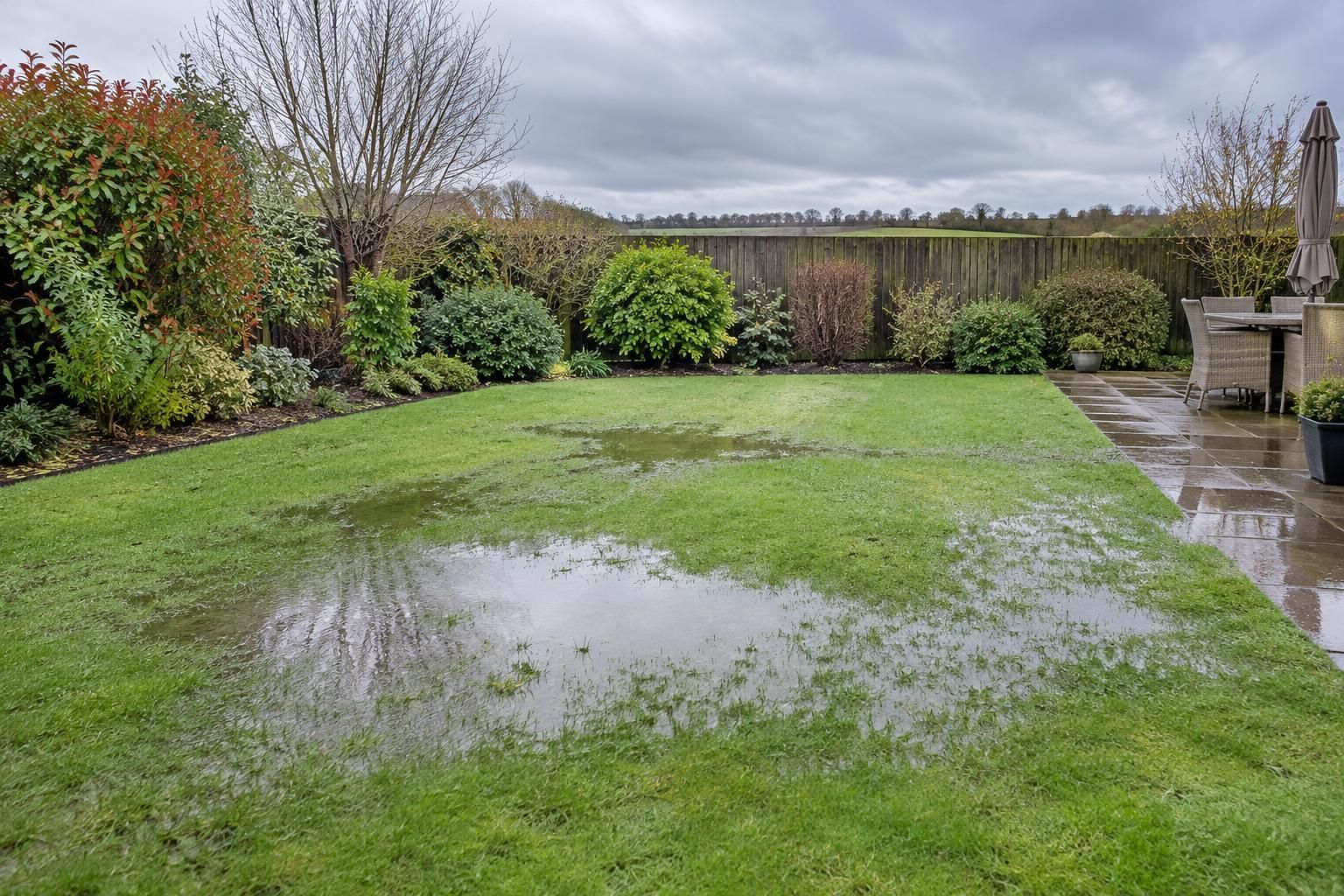
Garden drainage fixes start with finding out why your lawn stays wet
The most effective garden drainage fixes for a waterlogged lawn combine improving soil structure, creating a clear escape route for water, and installing a French drain or soakaway where ground stays sodden. Most gardens on Kildare's heavy clay soil need a mix of these steps to stay usable through an Irish winter.
This article looks at why garden lawns become waterlogged after an Irish winter, the warning signs to watch for, and the practical drainage options, from simple lawn aeration to full French drain installation, that keep a garden usable all year round.
Heavy clay soil is behind most waterlogged lawns in Kildare
Most gardens across County Kildare sit on heavy clay soil shaped by local glacial deposits, and clay does not let water pass through easily. When rain falls faster than it can soak away, it sits on the surface or just below it, leaving lawns soft, spongy and prone to moss and dark green patches of algae.
Ireland's climate makes the problem harder to ignore. Met Éireann's latest 30-year climate averages show annual rainfall has risen by around seven per cent compared with the previous climate period, with the wettest spells falling right across the autumn and winter growing season. A garden that coped a decade ago can struggle with the same rainfall pattern today.
If the wet patch is part of a larger plot that needs regular attention, our garden maintenance and landscaping service can look at the whole garden rather than just the problem area, which often turns up the real cause further up the slope.
New-build gardens are often among the worst affected. Topsoil is frequently spread thinly over compacted subsoil left by construction machinery, so water cannot work its way down even where the surface looks like ordinary lawn. Older gardens are not immune either, since decades of mowing on wet ground, or the gradual build-up of thatch, can compact the top layer of soil in exactly the same way. Either way, the result is a lawn that holds puddles long after the rest of the garden has dried out, makes mowing difficult, and can become unsafe for children or pets to play on.
Signs your garden needs better drainage
A lawn that takes a day to dry out after heavy rain is usually nothing to worry about. The warning signs below point to a drainage problem rather than ordinary wet weather, and are worth checking at different times of the year rather than just once during a particularly wet week.
- Standing water that is still visible more than 24 hours after rain has stopped
- Grass that feels soft, spongy or sinks underfoot even in drier spells
- Moss, algae or a sour, boggy smell spreading across part of the lawn
- Yellowing or thinning grass in the same low-lying area every year
- Water visibly running off the lawn towards the house, shed or boundary wall
- Puddles forming at the base of downpipes or along a fence line
Any one of these on its own may just need a drier spell to clear. Several of them together, especially in the same spot every winter, usually mean the ground needs help moving water away rather than just absorbing it. It is worth checking the lawn a day or two after a heavy downpour rather than during the rain itself, since that is when a genuine drainage problem shows up most clearly against ground that has simply had a wet afternoon.
Simple steps that improve lawn drainage before you dig
Before committing to a French drain or other land drain, a few lower-cost steps often reduce waterlogging enough to make the lawn usable again. These work best when carried out in sequence rather than on their own.
- Aerate the lawn with a fork or hollow-tine aerator to open up compacted clay and let water move down through the soil rather than sitting on top
- Top-dress with sharp sand and well-rotted organic matter to improve structure in the top few centimetres of soil
- Clear and extend downpipes and gutters so roof water lands well away from the lawn instead of soaking straight into it
- Regrade any obvious dips or low spots so surface water has a gentle fall towards a border, drain or soakaway rather than pooling
- Reduce thatch and mow at the correct height so grass roots can grow deeper and draw up excess moisture
Many smaller gardens see a real improvement from aeration and top-dressing alone, particularly where the problem is a single soft patch rather than the whole lawn. Autumn and early spring are the best times to carry out this work, since the ground is workable but growth has not yet taken off, which gives grass time to recover before the lawn is used heavily again. Repeating aeration every year or two, rather than as a one-off job, keeps clay soil from compacting back down to the same state.
French drains and soakaways solve persistent waterlogging
When a lawn stays wet no matter how dry the weather has been, surface treatments are rarely enough on their own. A French drain, a trench filled with gravel around a perforated land drain pipe, collects water below ground and carries it to a lower point, a soakaway or an existing surface water connection. A soakaway is simply a dug and gravel-filled pit that lets collected water disperse slowly into the surrounding subsoil away from the house and lawn.
Getting the fall, depth and outlet right matters more than the materials used, which is why a site visit beats guesswork on a sloped or heavy clay plot. Our earlier look at choosing patio paving materials for the Irish climate covers how the right surface and base layer next to a lawn also help water run off rather than pool against it.
Where a patio, path or driveway sits right beside the wet area, our paving and landscaping service can build in the correct falls so hard surfaces shed water away from the lawn instead of adding to the problem.
No two gardens need exactly the same drainage solution. A long, narrow back garden with a single low corner may only need one short land drain running to a soakaway, while a larger site with several wet pockets, or ground that slopes towards the house, often needs a connected network of drains feeding one outlet. The soil type, the slope of the garden and where the water is allowed to discharge all affect which approach makes sense, which is why a short site visit is far more useful than trying to plan the job from a description alone.
When a professional garden drainage fix is worth calling in
Small soft patches often respond to aeration, top-dressing and tidier downpipes. It is time to bring in professional garden drainage fixes once water is standing for days, returning every year in the same spot, or starting to affect a patio, shed base or boundary. A proper assessment can trace where the water is actually coming from, which is not always the lowest point you can see.
A site visit usually starts with a close look at the levels across the garden and a few test holes dug to see how far water has to travel before it reaches firmer ground, along with a check of where downpipes, gullies and any existing drains actually discharge to. That combination tells us whether the fix is a single run of land drain pipe to a soakaway, a wider network across the garden, or simply better management of surface water before it ever reaches the lawn.
For a wider seasonal checklist that covers the rest of the garden alongside drainage, see our guide to preparing your garden for winter in County Kildare, which looks at lawns, borders, trees and hedges together.
Keeping on top of garden drainage fixes early stops a soft, soggy patch turning into a lawn that is unusable for months at a time, and it protects the rest of the garden from the same heavy clay soil and rising rainfall that caused the problem in the first place.
If your lawn is holding water after every downpour, get in touch with our team for a site visit and a straightforward quote. Call us on 045254252 or email mdtrees5050@gmail.com and we will talk you through the right drainage fix for your garden.
Recent Posts


Garden drainage fixes start with finding out why your lawn stays wet
The most effective garden drainage fixes for a waterlogged lawn combine improving soil structure, creating a clear escape route for water, and installing a French drain or soakaway where ground stays sodden. Most gardens on Kildare's heavy clay soil need a mix of these steps to stay usable through an Irish winter.
This article looks at why garden lawns become waterlogged after an Irish winter, the warning signs to watch for, and the practical drainage options, from simple lawn aeration to full French drain installation, that keep a garden usable all year round.
Heavy clay soil is behind most waterlogged lawns in Kildare
Most gardens across County Kildare sit on heavy clay soil shaped by local glacial deposits, and clay does not let water pass through easily. When rain falls faster than it can soak away, it sits on the surface or just below it, leaving lawns soft, spongy and prone to moss and dark green patches of algae.
Ireland's climate makes the problem harder to ignore. Met Éireann's latest 30-year climate averages show annual rainfall has risen by around seven per cent compared with the previous climate period, with the wettest spells falling right across the autumn and winter growing season. A garden that coped a decade ago can struggle with the same rainfall pattern today.
If the wet patch is part of a larger plot that needs regular attention, our garden maintenance and landscaping service can look at the whole garden rather than just the problem area, which often turns up the real cause further up the slope.
New-build gardens are often among the worst affected. Topsoil is frequently spread thinly over compacted subsoil left by construction machinery, so water cannot work its way down even where the surface looks like ordinary lawn. Older gardens are not immune either, since decades of mowing on wet ground, or the gradual build-up of thatch, can compact the top layer of soil in exactly the same way. Either way, the result is a lawn that holds puddles long after the rest of the garden has dried out, makes mowing difficult, and can become unsafe for children or pets to play on.
Signs your garden needs better drainage
A lawn that takes a day to dry out after heavy rain is usually nothing to worry about. The warning signs below point to a drainage problem rather than ordinary wet weather, and are worth checking at different times of the year rather than just once during a particularly wet week.
- Standing water that is still visible more than 24 hours after rain has stopped
- Grass that feels soft, spongy or sinks underfoot even in drier spells
- Moss, algae or a sour, boggy smell spreading across part of the lawn
- Yellowing or thinning grass in the same low-lying area every year
- Water visibly running off the lawn towards the house, shed or boundary wall
- Puddles forming at the base of downpipes or along a fence line
Any one of these on its own may just need a drier spell to clear. Several of them together, especially in the same spot every winter, usually mean the ground needs help moving water away rather than just absorbing it. It is worth checking the lawn a day or two after a heavy downpour rather than during the rain itself, since that is when a genuine drainage problem shows up most clearly against ground that has simply had a wet afternoon.
Simple steps that improve lawn drainage before you dig
Before committing to a French drain or other land drain, a few lower-cost steps often reduce waterlogging enough to make the lawn usable again. These work best when carried out in sequence rather than on their own.
- Aerate the lawn with a fork or hollow-tine aerator to open up compacted clay and let water move down through the soil rather than sitting on top
- Top-dress with sharp sand and well-rotted organic matter to improve structure in the top few centimetres of soil
- Clear and extend downpipes and gutters so roof water lands well away from the lawn instead of soaking straight into it
- Regrade any obvious dips or low spots so surface water has a gentle fall towards a border, drain or soakaway rather than pooling
- Reduce thatch and mow at the correct height so grass roots can grow deeper and draw up excess moisture
Many smaller gardens see a real improvement from aeration and top-dressing alone, particularly where the problem is a single soft patch rather than the whole lawn. Autumn and early spring are the best times to carry out this work, since the ground is workable but growth has not yet taken off, which gives grass time to recover before the lawn is used heavily again. Repeating aeration every year or two, rather than as a one-off job, keeps clay soil from compacting back down to the same state.
French drains and soakaways solve persistent waterlogging
When a lawn stays wet no matter how dry the weather has been, surface treatments are rarely enough on their own. A French drain, a trench filled with gravel around a perforated land drain pipe, collects water below ground and carries it to a lower point, a soakaway or an existing surface water connection. A soakaway is simply a dug and gravel-filled pit that lets collected water disperse slowly into the surrounding subsoil away from the house and lawn.
Getting the fall, depth and outlet right matters more than the materials used, which is why a site visit beats guesswork on a sloped or heavy clay plot. Our earlier look at choosing patio paving materials for the Irish climate covers how the right surface and base layer next to a lawn also help water run off rather than pool against it.
Where a patio, path or driveway sits right beside the wet area, our paving and landscaping service can build in the correct falls so hard surfaces shed water away from the lawn instead of adding to the problem.
No two gardens need exactly the same drainage solution. A long, narrow back garden with a single low corner may only need one short land drain running to a soakaway, while a larger site with several wet pockets, or ground that slopes towards the house, often needs a connected network of drains feeding one outlet. The soil type, the slope of the garden and where the water is allowed to discharge all affect which approach makes sense, which is why a short site visit is far more useful than trying to plan the job from a description alone.
When a professional garden drainage fix is worth calling in
Small soft patches often respond to aeration, top-dressing and tidier downpipes. It is time to bring in professional garden drainage fixes once water is standing for days, returning every year in the same spot, or starting to affect a patio, shed base or boundary. A proper assessment can trace where the water is actually coming from, which is not always the lowest point you can see.
A site visit usually starts with a close look at the levels across the garden and a few test holes dug to see how far water has to travel before it reaches firmer ground, along with a check of where downpipes, gullies and any existing drains actually discharge to. That combination tells us whether the fix is a single run of land drain pipe to a soakaway, a wider network across the garden, or simply better management of surface water before it ever reaches the lawn.
For a wider seasonal checklist that covers the rest of the garden alongside drainage, see our guide to preparing your garden for winter in County Kildare, which looks at lawns, borders, trees and hedges together.
Keeping on top of garden drainage fixes early stops a soft, soggy patch turning into a lawn that is unusable for months at a time, and it protects the rest of the garden from the same heavy clay soil and rising rainfall that caused the problem in the first place.
If your lawn is holding water after every downpour, get in touch with our team for a site visit and a straightforward quote. Call us on 045254252 or email mdtrees5050@gmail.com and we will talk you through the right drainage fix for your garden.