Leylandii Hedge Reduction Advice for Kildare Gardens
9 November 2026
Share
How Leylandii Hedge Reduction Works in Practice
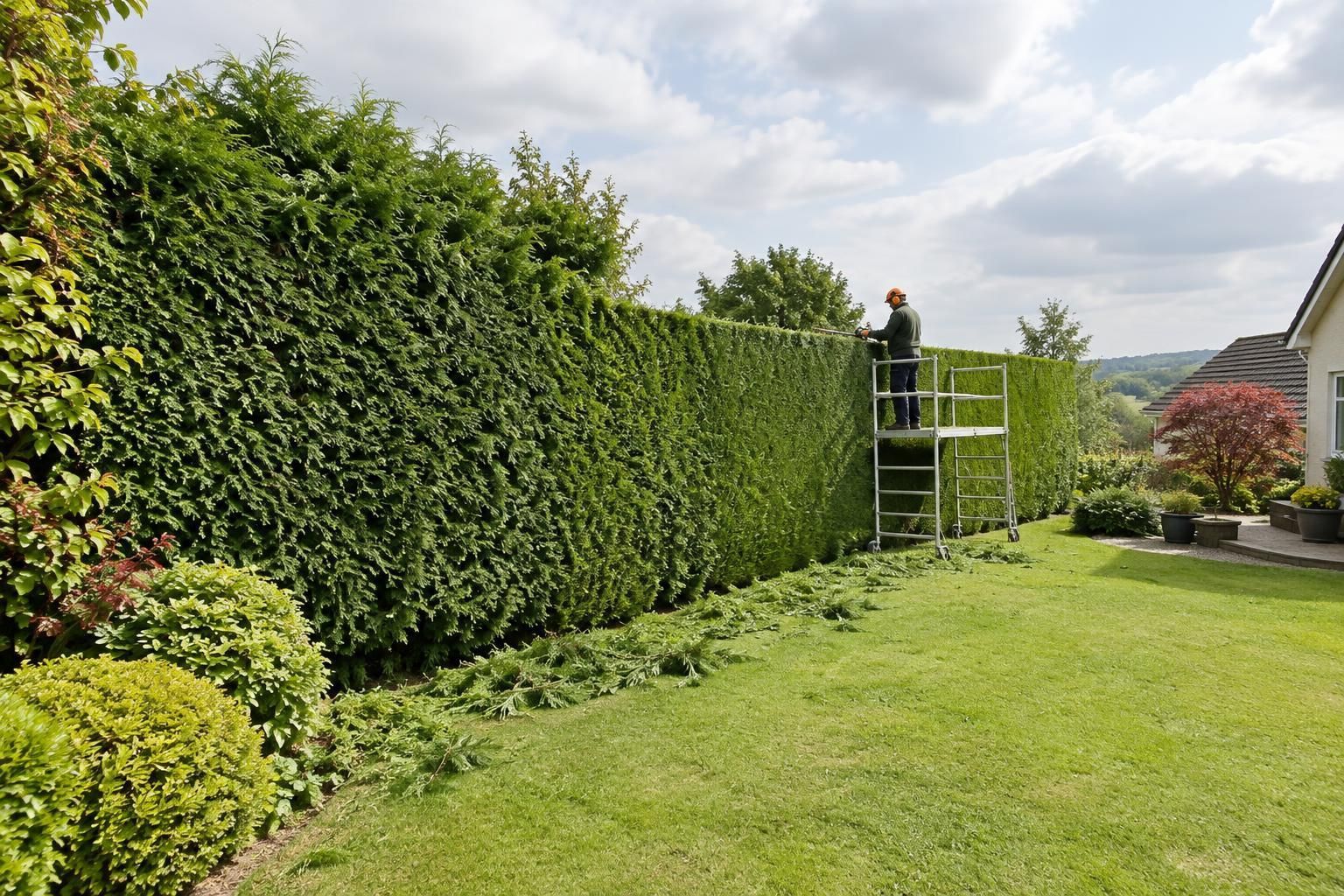
Leylandii hedge reduction means lowering the height and cutting back the sides of an overgrown conifer hedge in stages, always stopping within the green foliage because leylandii will not regrow from bare brown wood. Across Kildare, autumn and winter are a practical time to plan the work, with follow-up trims each summer.
Below we explain why leylandii behaves differently from other hedges, how we approach height and width reduction, when to schedule the work, what affects the cost and what to check before anyone starts cutting. If you have a hedge that has run away from you in Naas, Newbridge, Kildare town or the surrounding area, this should help you plan the job properly.
Why Leylandii Needs a Different Approach
Leyland cypress is one of the fastest growing hedging conifers planted in Irish gardens. Left untrimmed, it can add well over half a metre of growth a year, and a hedge planted as a quick screen can reach the height of a two-storey house within a decade or two. That speed is why so many hedges end up out of control.
The key fact about leylandii is that new shoots only grow from green foliage. Unlike beech, hawthorn, privet or laurel, it has no reserve of dormant buds in the older wood. If you cut back past the green layer into the brown interior, that section will stay bare and brown, in most cases permanently. Every decision in a leylandii hedge reduction comes back to this one limitation.
The interior of a mature hedge is usually brown and twiggy to a depth of half a metre or more on each side, because the outer foliage shades it out. So the amount of width you can safely take off is limited by how deep that green layer is, not by how wide you would like the hedge to be.
Reducing Leylandii Height Safely
Height is where you have the most freedom. Taking the top out of a leylandii hedge will leave a flat, brown top at first, but the side branches just below the cut will turn upwards over the following seasons and form a new green top. Seen from the ground, the brown top is rarely noticeable once the hedge is above head height.
When we reduce leylandii height, we normally cut the hedge 15 to 30 centimetres below the final height you want. The regrowth then fills in to the target height and gives a denser top that can be trimmed level each year. On very tall hedges, taking the height down by a third or more in a single visit is common, but on weak or thin hedges we may suggest doing it over two seasons.
A few points we consider before reducing height:
- Wind exposure. A tall, narrow hedge that has relied on its neighbours for shelter can be less stable once reduced unevenly, so we keep the cut line consistent along the run.
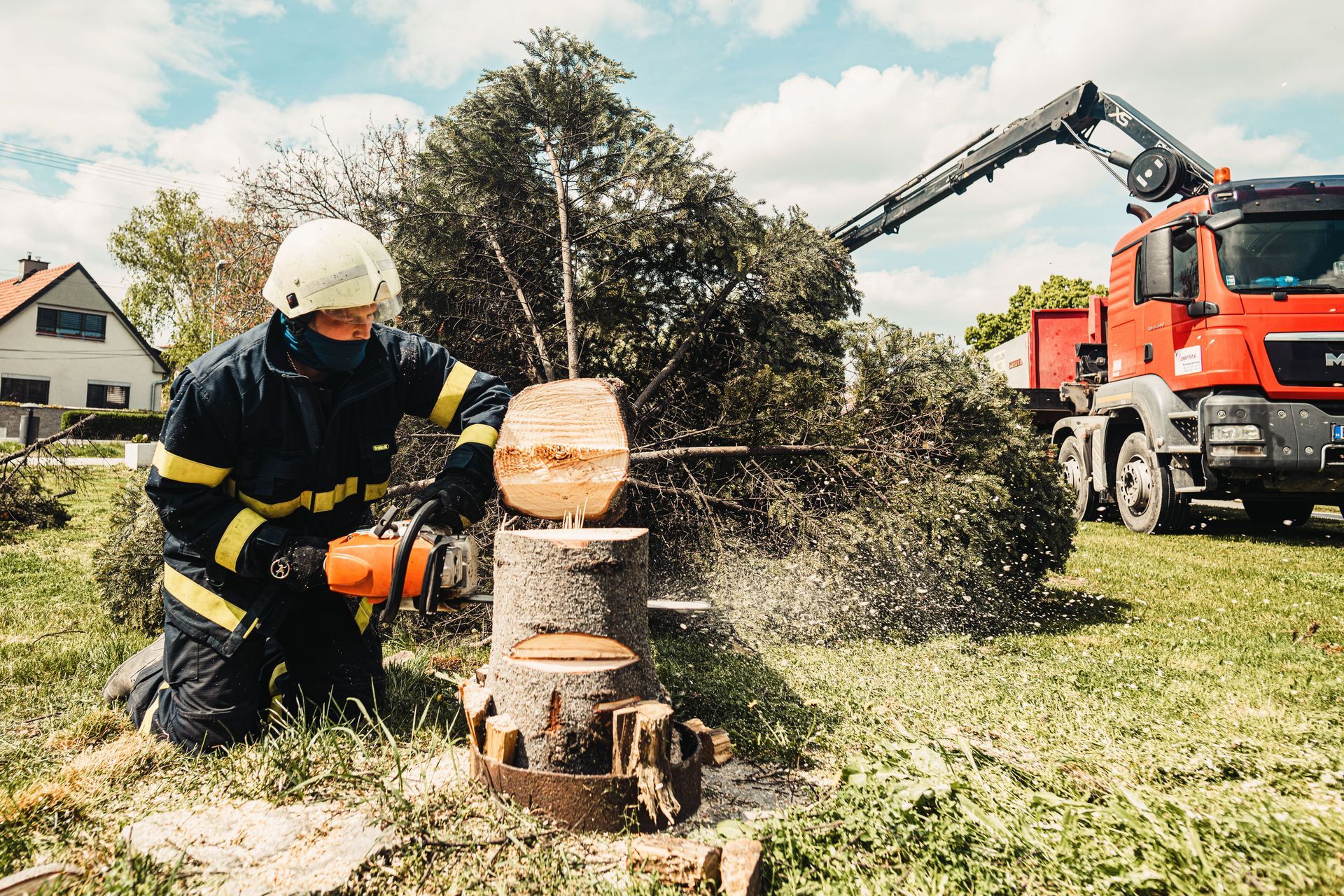
- Stem size. Older hedges often have main stems thicker than a wrist at the cut height, which calls for a saw rather than hedge trimmers and careful lowering of the cut sections.
- Final height. A hedge that will be maintained from the ground or a short platform is far cheaper to keep tidy in future years than one that needs a tower or access lift every time.
Cutting Leylandii Sides Without Going Into Brown Wood
Side reduction is where most damage is done. A hedge cut hard back to brown on one face can stay bare for years, and on a boundary that usually means looking at a wall of dead-looking twigs. Before cutting the sides, we check the depth of green foliage at several points along the hedge, because it varies with light and age.
The general rule is to leave a layer of green on every face after each cut. On a hedge that has been trimmed regularly, that may allow you to take off a fair amount of width. On a hedge that has not been touched for years, the green layer can be thin, and only light reduction of the sides is possible. In that case it is often better to accept a slightly wider hedge, reduce the height and trim the sides lightly each year to stop it spreading further.
Shaping matters too. We cut the sides with a slight taper so the hedge is a little narrower at the top than at the base. This lets light reach the lower branches and helps keep the bottom of the hedge green and full, which is where leylandii often thins out first.
Best Time to Cut Leylandii
For routine trimming, leylandii responds best to two or three light cuts during the growing season, usually from late spring to late summer, finishing early enough that new growth can harden before the cold weather. A last light trim in late summer keeps it tidy through the winter.
Larger reductions are often planned for autumn and winter, when growth is slow and bird nesting is over. Birds regularly nest in dense conifer hedges, and their nests are protected, so any cutting during the spring and summer months should start with a careful check for active nests. Our article on hedge cutting season and the law in Ireland sets out the rules in more detail.
Winter work also brings practical benefits. Borders and lawns beside the hedge are dormant, ground is easier to protect with boards and the brown top left by height reduction has the whole growing season ahead to start greening over. We avoid cutting in hard frost or during strong winds, both for safety and to avoid scorched foliage.
What Affects Leylandii Hedge Reduction Cost
Every hedge is different, so we price leylandii hedge reduction after seeing the site rather than by the metre over the phone. The main factors are:
- Height and length. A taller hedge needs more time, more equipment and more care when lowering cut material.
- Access. Whether we can get equipment along both faces of the hedge, or have to work from one side only, makes a large difference to how long the job takes.
- Volume of waste. Leylandii produces a large quantity of dense green waste, and chipping and removing it is a significant part of the work.
- Stem thickness. Heavy main stems at the cut height mean saw work rather than trimming.
- Obstacles. Sheds, glasshouses, fences, overhead cables and neighbouring property near the hedge all need extra protection or controlled lowering.
Where a hedge has become too large to manage or has gone brown and bare, reduction may not be the best option. In those cases we can talk through removal and replanting, and our tree surgery services cover the felling and clearance work involved.
Agreeing the Work With Your Neighbours
Many leylandii hedges sit on a boundary, so a reduction affects the people on the other side too. Before work starts, it is worth agreeing with your neighbour how high the hedge will be, who will look after their side and where the cut material will go. Access to their side usually makes a much neater job.
Check the following before booking the work:
- Who owns the hedge, and whether any part of it is shared.
- Whether your neighbour is happy for us to work from their garden.
- Whether there are cables, drains or structures close to the base of the hedge.
- How tall you want the hedge to be after the regrowth fills in, not on the day of cutting.
Once the reduction is done, regular light trimming is what keeps leylandii in check. Our hedge trimming service in Kildare can take care of that each year so the hedge never needs heavy reduction again.
Getting Your Hedge Back Under Control
Good leylandii hedge reduction comes down to taking the height down firmly, keeping green foliage on every face and following up with regular trims so the hedge never runs away again. For gardens across County Kildare, autumn and winter are a sensible time to plan the work before the spring growth starts.
If you would like us to look at an overgrown hedge, contact MD Tree & Landscaping for a free quote. You can call us on 045 254 252 or email mdtrees5050@gmail.com.
Recent Posts
How Leylandii Hedge Reduction Works in Practice
Leylandii hedge reduction means lowering the height and cutting back the sides of an overgrown conifer hedge in stages, always stopping within the green foliage because leylandii will not regrow from bare brown wood. Across Kildare, autumn and winter are a practical time to plan the work, with follow-up trims each summer.
Below we explain why leylandii behaves differently from other hedges, how we approach height and width reduction, when to schedule the work, what affects the cost and what to check before anyone starts cutting. If you have a hedge that has run away from you in Naas, Newbridge, Kildare town or the surrounding area, this should help you plan the job properly.
Why Leylandii Needs a Different Approach
Leyland cypress is one of the fastest growing hedging conifers planted in Irish gardens. Left untrimmed, it can add well over half a metre of growth a year, and a hedge planted as a quick screen can reach the height of a two-storey house within a decade or two. That speed is why so many hedges end up out of control.
The key fact about leylandii is that new shoots only grow from green foliage. Unlike beech, hawthorn, privet or laurel, it has no reserve of dormant buds in the older wood. If you cut back past the green layer into the brown interior, that section will stay bare and brown, in most cases permanently. Every decision in a leylandii hedge reduction comes back to this one limitation.
The interior of a mature hedge is usually brown and twiggy to a depth of half a metre or more on each side, because the outer foliage shades it out. So the amount of width you can safely take off is limited by how deep that green layer is, not by how wide you would like the hedge to be.
Reducing Leylandii Height Safely
Height is where you have the most freedom. Taking the top out of a leylandii hedge will leave a flat, brown top at first, but the side branches just below the cut will turn upwards over the following seasons and form a new green top. Seen from the ground, the brown top is rarely noticeable once the hedge is above head height.
When we reduce leylandii height, we normally cut the hedge 15 to 30 centimetres below the final height you want. The regrowth then fills in to the target height and gives a denser top that can be trimmed level each year. On very tall hedges, taking the height down by a third or more in a single visit is common, but on weak or thin hedges we may suggest doing it over two seasons.
A few points we consider before reducing height:
- Wind exposure. A tall, narrow hedge that has relied on its neighbours for shelter can be less stable once reduced unevenly, so we keep the cut line consistent along the run.
- Stem size. Older hedges often have main stems thicker than a wrist at the cut height, which calls for a saw rather than hedge trimmers and careful lowering of the cut sections.
- Final height. A hedge that will be maintained from the ground or a short platform is far cheaper to keep tidy in future years than one that needs a tower or access lift every time.
Cutting Leylandii Sides Without Going Into Brown Wood
Side reduction is where most damage is done. A hedge cut hard back to brown on one face can stay bare for years, and on a boundary that usually means looking at a wall of dead-looking twigs. Before cutting the sides, we check the depth of green foliage at several points along the hedge, because it varies with light and age.
The general rule is to leave a layer of green on every face after each cut. On a hedge that has been trimmed regularly, that may allow you to take off a fair amount of width. On a hedge that has not been touched for years, the green layer can be thin, and only light reduction of the sides is possible. In that case it is often better to accept a slightly wider hedge, reduce the height and trim the sides lightly each year to stop it spreading further.
Shaping matters too. We cut the sides with a slight taper so the hedge is a little narrower at the top than at the base. This lets light reach the lower branches and helps keep the bottom of the hedge green and full, which is where leylandii often thins out first.
Best Time to Cut Leylandii
For routine trimming, leylandii responds best to two or three light cuts during the growing season, usually from late spring to late summer, finishing early enough that new growth can harden before the cold weather. A last light trim in late summer keeps it tidy through the winter.
Larger reductions are often planned for autumn and winter, when growth is slow and bird nesting is over. Birds regularly nest in dense conifer hedges, and their nests are protected, so any cutting during the spring and summer months should start with a careful check for active nests. Our article on hedge cutting season and the law in Ireland sets out the rules in more detail.
Winter work also brings practical benefits. Borders and lawns beside the hedge are dormant, ground is easier to protect with boards and the brown top left by height reduction has the whole growing season ahead to start greening over. We avoid cutting in hard frost or during strong winds, both for safety and to avoid scorched foliage.
What Affects Leylandii Hedge Reduction Cost
Every hedge is different, so we price leylandii hedge reduction after seeing the site rather than by the metre over the phone. The main factors are:
- Height and length. A taller hedge needs more time, more equipment and more care when lowering cut material.
- Access. Whether we can get equipment along both faces of the hedge, or have to work from one side only, makes a large difference to how long the job takes.
- Volume of waste. Leylandii produces a large quantity of dense green waste, and chipping and removing it is a significant part of the work.
- Stem thickness. Heavy main stems at the cut height mean saw work rather than trimming.
- Obstacles. Sheds, glasshouses, fences, overhead cables and neighbouring property near the hedge all need extra protection or controlled lowering.
Where a hedge has become too large to manage or has gone brown and bare, reduction may not be the best option. In those cases we can talk through removal and replanting, and our tree surgery services cover the felling and clearance work involved.
Agreeing the Work With Your Neighbours
Many leylandii hedges sit on a boundary, so a reduction affects the people on the other side too. Before work starts, it is worth agreeing with your neighbour how high the hedge will be, who will look after their side and where the cut material will go. Access to their side usually makes a much neater job.
Check the following before booking the work:
- Who owns the hedge, and whether any part of it is shared.
- Whether your neighbour is happy for us to work from their garden.
- Whether there are cables, drains or structures close to the base of the hedge.
- How tall you want the hedge to be after the regrowth fills in, not on the day of cutting.
Once the reduction is done, regular light trimming is what keeps leylandii in check. Our hedge trimming service in Kildare can take care of that each year so the hedge never needs heavy reduction again.
Getting Your Hedge Back Under Control
Good leylandii hedge reduction comes down to taking the height down firmly, keeping green foliage on every face and following up with regular trims so the hedge never runs away again. For gardens across County Kildare, autumn and winter are a sensible time to plan the work before the spring growth starts.
If you would like us to look at an overgrown hedge, contact MD Tree & Landscaping for a free quote. You can call us on 045 254 252 or email mdtrees5050@gmail.com.